Let us introduce ourselves…

Featured

front-page-picture

About us:

We know that older motorists have a wealth of experience, confidence and tolerance. However, sight, hearing, reaction time and judgement of speed and distance may not be as sharp as it once was.

Fragility increases with age, so injuries tend to be more serious and recovery takes much longer. Casualty rates do increase for car drivers aged over about 65, and the fatality rate increases significantly.

The Older Drivers Forum is a not-for-profit organisation run by volunteers to support mature motorists on how to continue driving safely for longer.

The Forum is passionate that none of us become complacent about our driving but take steps to make sure we are safe to drive, as long as we are fit to do so.

The Forum’s website is full of practical information and tips including how to renew your licence, how to identify eyesight and medical conditions, and where to book a confidence boosting assessment to refresh driving skills.

We regularly run events and webinars, many are recorded and can be found on our website for you to watch in the comfort of your home.

So do dip in and take a look! Also register to receive regular updates on our activities.

The Forum does not perform any legal function, and we do not have the authority to revoke driving licences.

We work nationally with Road Safety Organisations, Department for Transport and Government departments, constantly seeking the most effective means to support safer driving into old age.

The Older Drivers Forum are here to help:

  • With practical advice on how to keep driving safely for longer
  • Plan an independent life without a car
  • Families and carers concerned about a mature driver

We’ll be constantly adding advice and news for older drivers to our page so please keep coming back for all the latest updates and click on our ‘FOLLOW’ button, enter your email and we will send you updates on what we are doing.

Why not explore the web site and see all the advice, videos, brochures, recommendations on driving assessments and much more we give to help you, or someone you know, carry on driving safely for longer.

Useful Links:

  • Click here to find a Mature Driver Assessment in your area for your needs
  • Click here to find a Specially Trained Approved Driving Instructor for Mature Drivers
  • Click here to see our recorded Webinars
  • Click here to find advice for Older / Mature Drivers
  • Click here to fin advice for Family and Friends of a Mature Motorist
  • Click here to see Videos to help mature motorists
  • Click here to find see range of useful Advice

In the meantime, got a question? Click here to contact us.

Below are just some exciting things going on:

New Road Safety Strategy – Information for Mature and Older Drivers
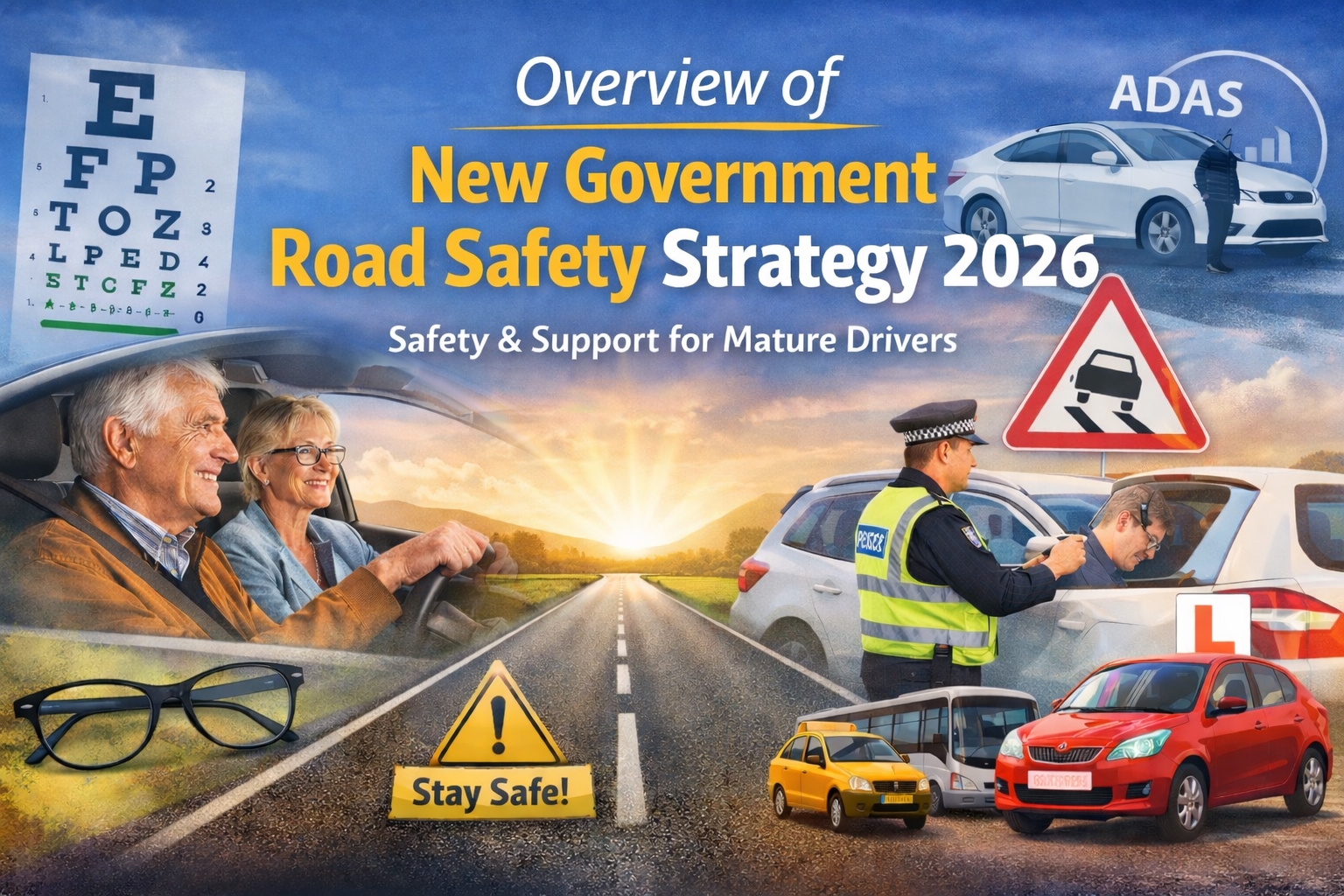
We recognise that many older drivers may have questions or concerns about the New Road Safety Strategy 2026 and what the proposed changes may mean for them. We want to offer reassurance that these measures are intended to make Britain’s roads safer and fairer for everyone, including those of us in later life. They are not designed to undermine independence or unfairly single out older drivers. To read more about the changes and overview then click here

The Do’s and Don’ts of Clearing Frosted Windscreens & Winter Driving
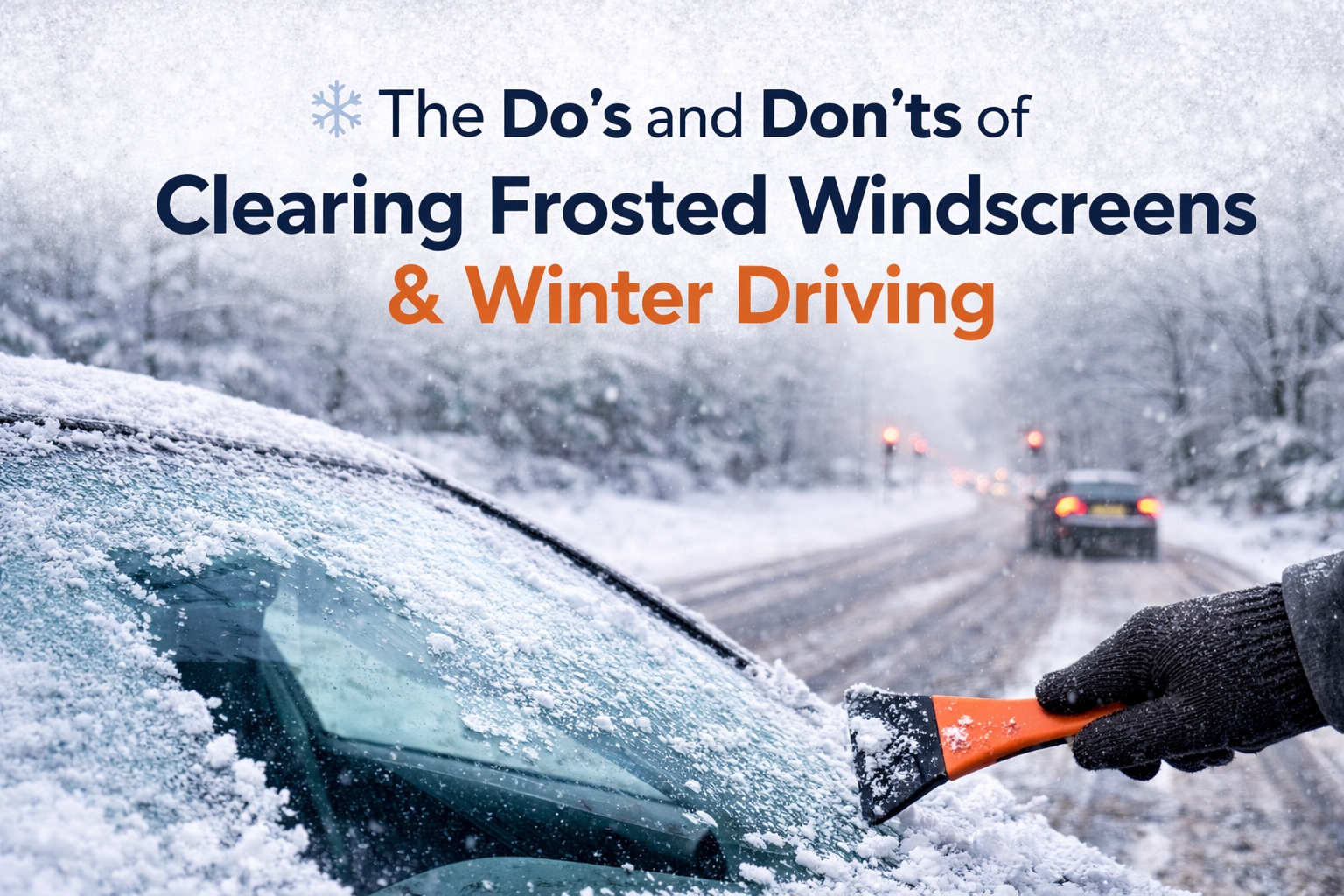
Cold winter mornings are a familiar challenge for UK drivers. Frosted windscreens can tempt even experienced motorists into bad habits that risk fines, damage to vehicles, or serious collisions. Knowing the correct way to clear your windscreen—and how to drive safely once you’re on the road—is essential during winter months. Click here to read a practical guide to the do’s and don’ts of clearing frosted windscreens and driving in winter conditions.

FREE webinar – ‘Concerned About A Mature Driver? – We Can Help.’

The holiday period brings precious time with family —

but sometimes that also brings difficult realisations about a loved one’s driving abilities. New scrapes on the car that no one can quite explain. A growing knot of worry you can’t ignore.

To find out more and register for the webinar click here

ADAS – Understanding Advanced Driver Assistance Systems 
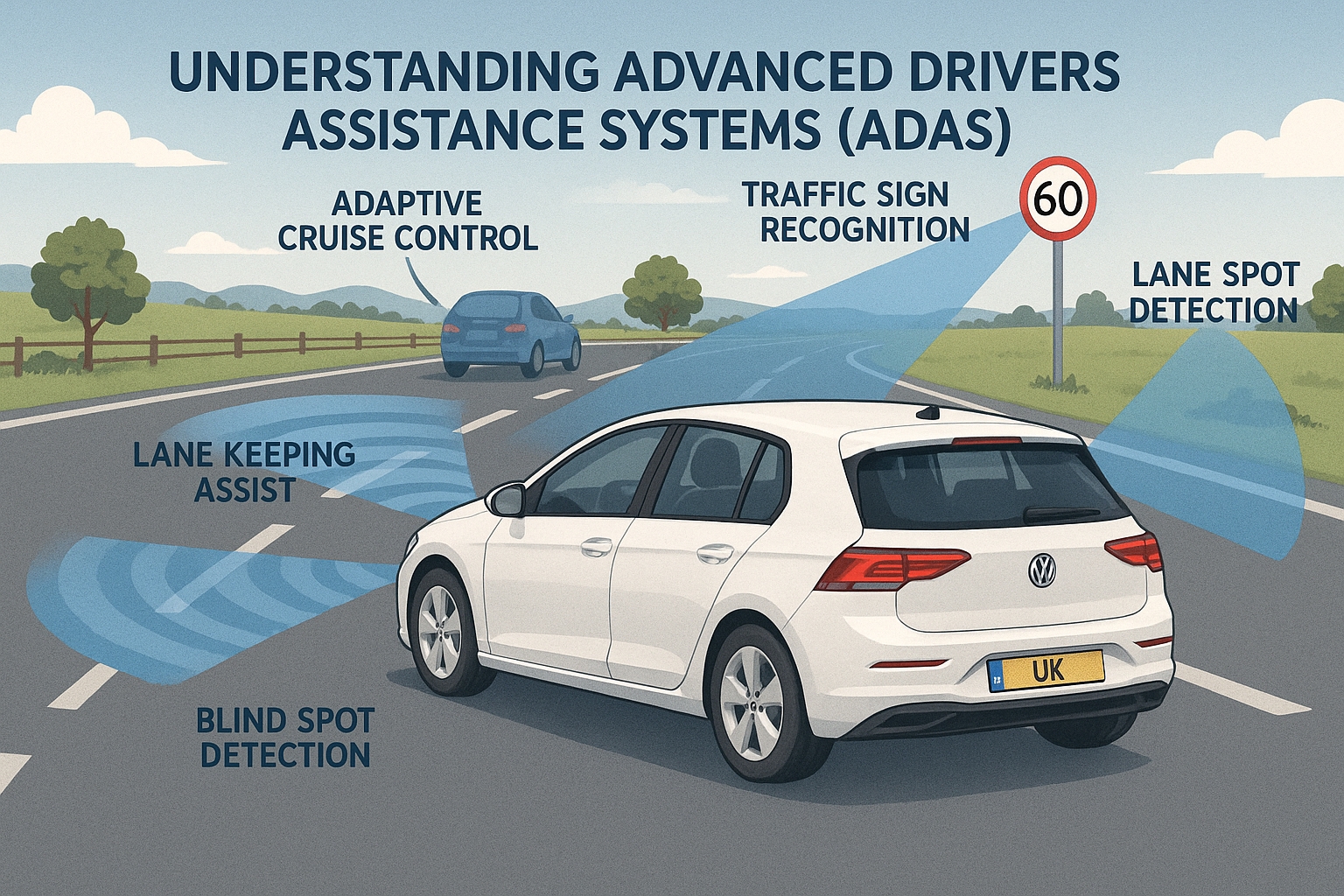
Road collisions remain a leading cause of death and serious injury in the UK. Each year, around 1,700 people begin journeys they tragically do not complete and many of these incidents are entirely preventable. Advanced driver assistance systems, also referred to as ADAS are a range of technologies fitted to modern vehicles that enhance safety, improve awareness, and support drivers in both routine and emergency situations. Some features are always active, some require driver input, and others only engage in critical moments. Understanding how they work can help you get the most out of your vehicle and stay safer on the road. Click here to read more and see explanatory videos

Is Your Vision Roadworthy? – Vision and Driving Campaign

Today our chair Rob Heard MBE, Eye Health UK and University of Warwick have launched our third annual roadside vision screening campaign to raise awareness of eyesight rules for motorists called the ‘Is Your Vision Roadworthy?’ To read more CLICK HERE

Your opinions on this website wanted!

We are planning improvements to our website and would like your views on what you like or don’t like about the current layout and content.  If you are interested, please click on this link to take our survey which should take 10 – 15 minutes to complete:  https://warwick.co1.qualtrics.com/jfe/form/SV_bBYxecxizOKhF8q or click here

Chair off Older Drivers Forum awarded MBE

Yesterday our chair, Rob Heard, attended Windsor Castle for the investiture of my MBE, which was awarded by Prince William. To read more click here

Gloucestershire Older Drivers Forum webinars

2462862---ODF-logo-for-Gloucestershire-1Gloucestershire Older Drivers Forum run regular webinars on numerous subjects to find out more click here

Channel 5 Documentary – ‘Cause of Death – Licence to Kill’

We would urge everyone to watch this documentary on Channel 5 which highlights the death of 4 pedestrians due to drivers with defective vision who knew they have defective vision but still drove causing devastating consequences. When 90% of driving is visual, we all need to make sure our vision meets the standards for vision for driving. Click here to read more and get the link

Call for compulsory Eyesight testing after Fatal Collisions 

Our Chair. Rob Heard MBE, this week attended an inquest in Preston as an expert witness for the death of 4 people who were killed by drivers with defective vision. As a result the Coroner has called for changes to be made. Our chair appeared on BBC Breakfast to

Older Drivers Forum on BBC Morning Live – Retiring from Driving

IMG_1137On Wednesday 26th March 2025 BBC Morning Live ran a piece about retiring from driving. This featured 85 year old Rose who decided to retire from driving after attending one of the Gloucestershire Older Drivers Forum brilliant and informative webinars. To read more and see the piece click here

Gloucestershire Older Drivers Forum win award

Impact Awards 210325We are so pleased to announce that Gloucestershire Older Drivers Forum has been recognised and they have been given an award for the differences they have made to many. To read more about this click here

ITV Tonight programme – “Older Drivers: Danger at the Wheel?”

IMG_1431On Thursday 23rd January 2025 the ITV Tonight programme ran a 30 minute documentary on Older Drivers and is very well balanced and worth watching. To watch the programme and learn more click here

Older Drivers Forum Chair receives MBE

Rob Heard

We are pleased to announce that our chair, Rob Heard, was awarded an MBE for Road Safety and particularly for his Older Drivers work in the 2025 New Years Honours List. Click here to read more and what Rob has said about receiving the award.

Click here to listen to a BBC Radio Solent interview with him shortly after the list came out.

Is Your Vision Roadworthy?

Is Your Vision Roadworthy? Hero Image RectangleRead all about a recent campaign looking at Vision and Driving and the worrying number of motorists driving on Britain’s roads with sub-standard vision. This was covered on the BBC Morning Live on 5th December 2024 and can be also viewed on this article. Click here to read all about this

Rural Road Safety – NFU Mutual

NFU image

To help guide and advise everyone on how to use rural roads safely, we’ve assisted NFU Mutual along with the four UK farming unions, Farm Safety Foundation – Yellow WelliesThe British Horse SocietyRoSPA to create a Code for Countryside Roads for everyone to use. With the number of lives lost on rural roads 70% higher than on urban highways, we hope the Code can help to tackle the tragic and disproportionate loss of life on the UK’s rural roads. Click here to find out more

Media Interest on Mature Driver Assessments

old-0059There is a lot in the press at the moment about Older Drivers and Mature Driver Assessments in this post we discuss why and what is happening. Click here to read

Mobility Scooters

Safer-Mobility-logo-on-MS-imageMobility scooter riders are more than two and a half times more likely to be killed in a road crash compared to other road users, data has revealed. Surewise have created a Mobility Scooter Safety Guide which can be found by clicking here

Reported Road Casualties released

Graph statsThe Department for Transport have released the 2023 statistics for Reported road casualties in Great Britain for 2023, comparing them as well from previous years results. To read all about this click here


LBC Radio Interview – Older Drivers 1st January 2024

David LammyListen to our chair speaking to David Lammy on LBC Radio about Older Drivers and particular concerns raised about drivers over 90 years of age. Click here to listen to the interview.

BBC Radio Gloucestershire interview on Winter Driving Tips

Image 17-11-2023 at 14.41Listen to Nigel Lloyd-Jones from the Older Drivers Forum for Gloucestershire talking about Winter Driving with some excellent tips to be safe on the road as we enter into Winter.
Click here to find out more

Government launches plan to put drivers back in the driving seat

s300_plan-for-drivers-960The Government has announced a new 30-point plan it says will support drivers with easier parking, smoother journeys and fairer traffic enforcement. Click here to read more

Car Insurance premiums rising

iStock_000012927006MediumHave you recently noticed that your Car Insurance premium has gone up and thought:

‘Why has my Car Insurance premium gone up?’

‘What can you I do to keep my premiums as low as possible?’

Visit our page on Car Insurance to see the answers to those questions – Click here

BBC News – ‘Fitness to Drive’

Screenshot 2023-07-04 at 12.11.36Today (4th July 2023) the BBC have been covering across it news channels the subject of ‘Fitness to Drive’. To read the article and listen to our chair being interviewed on the subject on BBC Radio Somerset click here

Older Drivers Forum supports Project EDWARD

Project Edward BucksIn May we have been supporting Project EDWARD (Every Day Without A Road Death) week of Action. To see more watch the video by clicking on this link

Podcast – ScORSA

ScORSA PodcastListen to this Podcast involving our Chair Rob Heard talking with Scottish Occupational Road Safety Alliance. Click here to find the Podcast and scroll down to Older Drivers

BBC Radio 2 Interview with Jeremy Vine

BBC Radio 2

On Friday 24th March the chair and founder of the Older Drivers Forum, Rob Heard, was interviewed by Jeremy Vine on BBC Radio 2 talking about Family and Friends and how to have and start those difficult conversations when we maybe concerned about a loved ones driving. To listen to the interview click here


Webinars / Presentations
Click here to see the recordings

the-highway-code webinar croppedIn March 2022 we ran a webinar all about the new changes to the Highway Code and road safety tips. This webinar starts by giving an update on the findings from the Older Drivers Task Force report published in November 2021. The webinar then goes on to cover the new Highway Code and particularly the new changes, as well as giving you useful road safety tips.
To view the Webinar visit our Highway Code page by clicking here


NATIONAL WEB SITE

For advice, support and courses nationally then visit:
www.olderdrivers.org.uk

SITE OWNERSHIP
This site is supported by Hampshire Constabulary Road Safety Team as such follows the same Privacy requirements as them.

PRIVACY NOTICE
To find out more about how we treat personal data and how to exercise your data rights, see our privacy notice

IMPORTANT NEWS

Highway Code – Changes

the-highway-code As of the 29th January 2022 the Highway Code has a number of key changes. To find out more about theses changes, Click Here

Older Drivers Task Force Report published

CDBE091D-8BEF-4F27-8DE8-CBF6DA8CEA8B_1_201_aIn November 2021, the Older Drivers Task Force via Road Safety Foundation published a review of older driver road safety. To find out more about this click here

National Highways teams up with Hidden Disabilities Sunflower

National Highways image Click here to find out more and listen to our chair talking on a podcast to Hidden Disabilities Sunflower

For an introduction in British Sign Language, please see below.

In the meantime, got a question? Post a comment below or contact us here.

Thank you.

iStock_000009846717Large - CROPPED

TyreSafe partners with Older Drivers Forum to support safer driving for longer

TyreSafe partners with Older Drivers Forum to support safer driving for longer

Visit our Tyre Safe page to find useful tips on keeping our Tyres safe

UK road safety charity TyreSafe has announced a new partnership with the Older Drivers Forum, aimed at helping mature motorists, approximately 6.3 million drivers aged 70 and over, with a better understanding of the critical role tyres play in staying safe on the road as driving conditions and personal capabilities change with age.

The new partnership will focus on ensuring older drivers are equipped with the knowledge and tools to reduce risk — with particular emphasis on tyre condition, inflation and tread depth. Tyres play a vital role in braking performance and vehicle control, particularly in wet conditions where stopping distances are significantly increased. Research highlights just how critical tyre condition can be:

  • At 70mph, worn tyres have seven times more effect on total stopping distance in wet weather than drinking alcohol
    (Source: Halfords plc and Professor Peter Wells, Cardiff University, December 2022)
  • At 70mph, worn tyres add 27 metres — or 28% — to the Highway Code baseline stopping distance
    (123m vs. 96m baseline)
    (Source: Halfords plc and Professor Peter Wells, October 2023)
  • At 50mph, wet braking distances increased by 6.9m on tyres at the legal minimum of 1.6mm compared to new tyres, while tyres with 3mm tread took only 2.7m longer to stop
    (Source: Continental Tyres)

These differences can be critical for drivers who may already be compensating for reduced reaction times or eyesight changes.

Through the partnership, TyreSafe and the Older Drivers Forum will work together to raise awareness of how maintaining roadworthy tyres — correct pressure, good condition and sufficient tread — can help improve safety and confidence behind the wheel.

“Tyres are the only part of the vehicle in contact with the road, and their condition can make a profound difference to stopping distances and vehicle control,” said Stuart Lovatt, Chair of TyreSafe.
“As we get older, even small increases in braking distance can have serious consequences. By working with the Older Drivers Forum, we want to ensure mature drivers understand how simple tyre checks can help them continue driving safely and confidently for longer.”

“Many older drivers want clear, practical advice they can trust,” said Rob Heard MBE, Chair of the Older Drivers Forum. “Our partnership with TyreSafe strengthens the support we can offer by highlighting the importance of tyres in real-world driving situations. Understanding how tyre condition affects stopping distances and vehicle control helps older drivers make informed decisions that protect themselves and others.”

TyreSafe will support the Forum with tyre safety expertise, educational content and evidence-based messaging, reinforcing the importance of regular tyre checks as part of safe driving at any age.

For more information on tyre safety, visit www.tyresafe.org.


New Road Safety Strategy – Information for Mature and Older Drivers

New Road Safety Strategy – Information for Mature and Older Drivers

We recognise that many older drivers may have questions or concerns about the Great Britain Road Safety Strategy 2026 (Press release) and what the proposed changes may mean for them. We want to offer reassurance that these measures are intended to make Britain’s roads safer and fairer for everyone, including those of us in later life. They are not designed to undermine independence or unfairly single out older drivers.

Below is an overview of the key proposals, alongside our perspective on how they support road safety while respecting the confidence, experience, and independence of older motorists.

To read the full report click here The main report is broken down into 4 themes:

  • Theme 1 – Supporting road users
  • Theme 2 – Taking advantage of technology, innovation and data for safer vehicles and post collision care
  • Theme 3 – Ensuring infrastructure is safe
  • Theme 4 – Robust enforcement to protect all road users


Reducing Deaths and Serious Injuries

The strategy sets out an ambitious national commitment to:

  • Reduce road deaths and serious injuries by 65% by 2035
  • Achieve an even greater reduction of 70% for children under the age of 16

Why this matters:

On average, around four people die every day on Britain’s roads, and approximately 80 people are killed or seriously injured daily as a result of road traffic collisions — roughly one every 18 minutes. These figures underline the need for decisive, evidence-based action across the whole driving population.

 Older Drivers: Eyesight

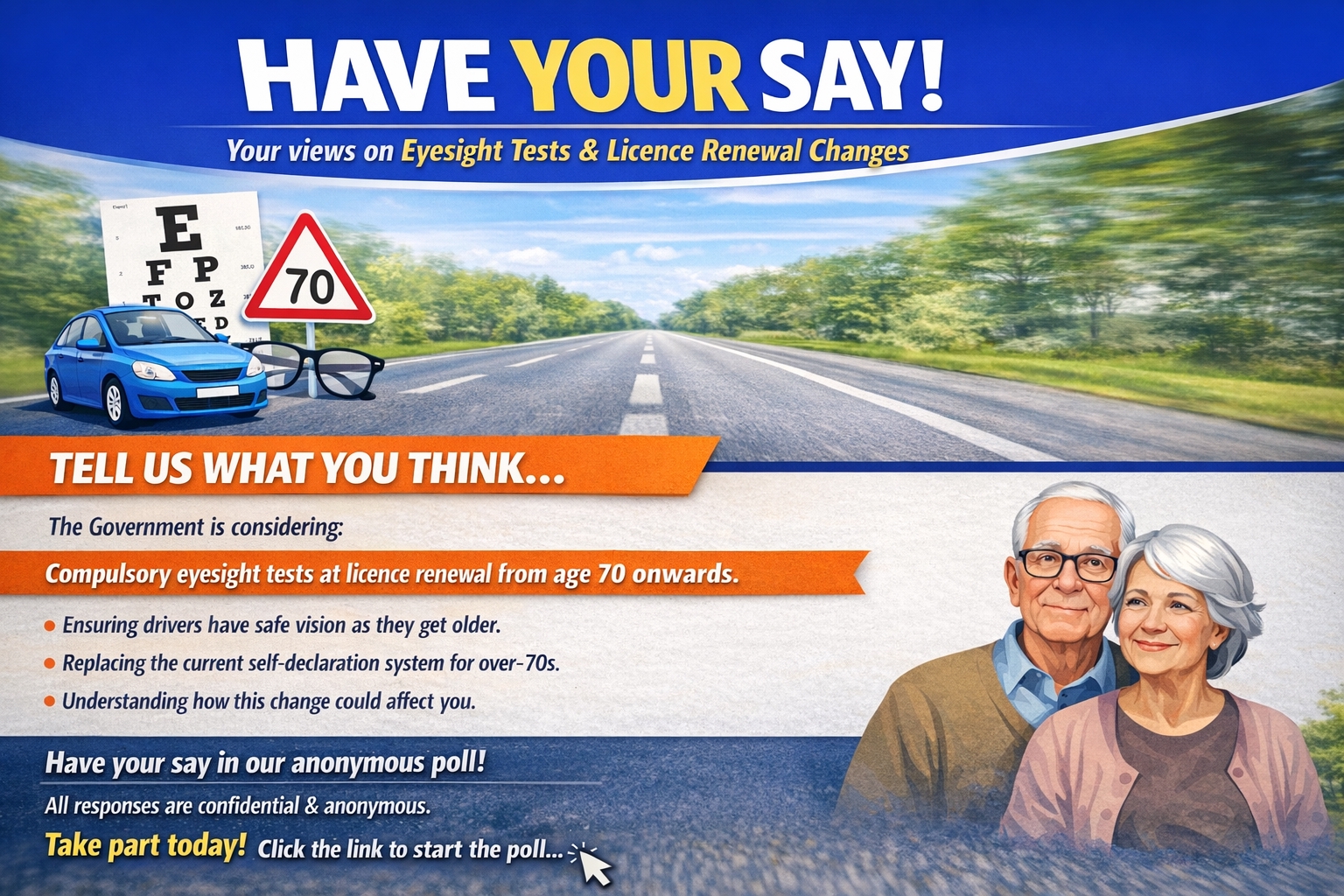
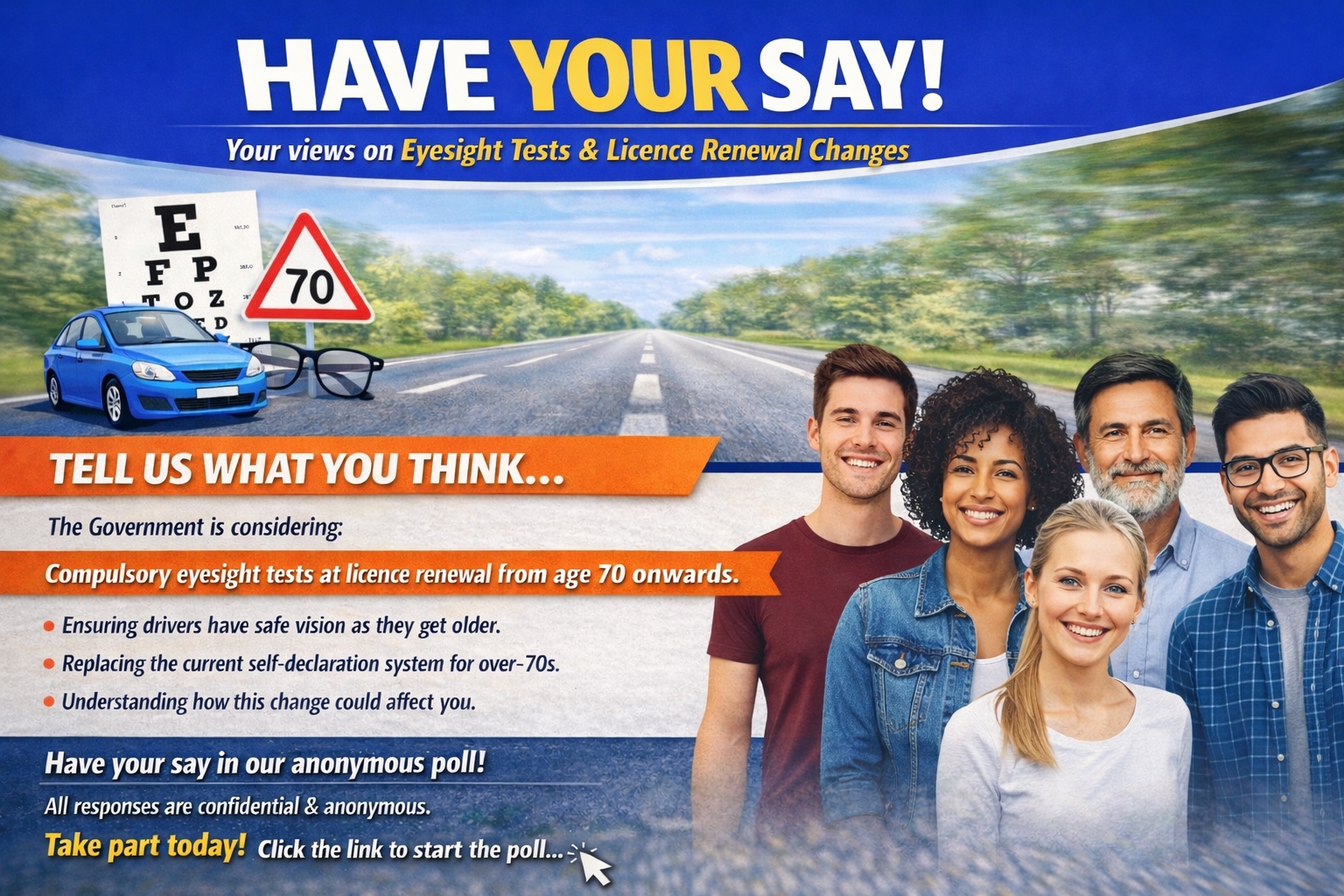
One of the headline proposals is the introduction of compulsory eyesight testing at licence renewal from age 70, with further checks at least every three years thereafter. This would replace the current self-declaration system, which can fail to identify gradual changes in vision.

There is also consideration of future cognitive assessments for drivers who have certain medical conditions, with the aim of maintaining safety while supporting continued independence and highlighting the importance of drivers notifying the DVLA if they have a notifiable medical condition, as well reminding medical professionals the importance to inform the DVLA if their patient is unwilling or unable to notify the DVLA.

The strategy also says the government will continue to work closely with the National Police Chiefs’ Council to highlight the importance of regular police roadside eyesight tests for all drivers, ensuring that those drivers who fail to meet the minimum eyesight standards required for driving will have their driving licence revoked by DVLA.

Why this helps

Regular eyesight checks provide reassurance that vision remains at a safe standard for driving. This is intended as a supportive safeguard, not a restriction, and can help identify issues early so that people can continue driving confidently and safely for as long as possible.

The Older Drivers Forum is supportive of this proposal. We recognise and value the fact that the vast majority of older drivers are conscientious and proactive in maintaining their eyesight through regular optometrist visits. However, we also acknowledge that a small number of drivers continue to drive despite their vision no longer meeting the legal standard for safe driving.

Under the current self-certification system, these individuals can remain on the road undetected. Compulsory eyesight testing by a qualified optician provides a reliable and objective way to identify unsafe vision, protecting both drivers and other road users.

Ideally, we would support compulsory eyesight testing for all drivers, beginning at first licence application and continuing at regular intervals — for example, every 10 years at photocard renewal. We hope this is a direction policy may move toward in the future. However, we recognise the practical challenges of introducing such a system immediately for the 6.3 million people who currently hold a driving licence.

Introducing compulsory testing initially for a specific group is a measured and proportionate approach, allowing systems to be tested and refined before any wider rollout. This is particularly appropriate given that from age 60, individuals are entitled to free NHS-funded eyesight tests.

We understand that some older drivers may feel this approach is unfair. However, research consistently shows that eyesight can deteriorate with age — often gradually and without obvious symptoms. DVLA data also shows that licence revocations resulting from police notifications increase significantly from the age of 70.  Recent large-scale independent academic surveys have shown that over 85% of older drivers support eyesight testing at licence renewal.  In addition, polling conducted during Older Drivers Forum webinars on vision and driving indicates that around 93–95% of older drivers support compulsory eyesight testing.

*(Hawley, C.A. (2021) The views of older drivers on road safety interventions. IAM RoadSmart report for the Department for Transport. September 2021. https://iamwebsite.blob.core.windows.net/media/docs/default-source/research-reports/iam-roadsmart-older-drivers-2021.pdf

Importantly, a driving licence would only be withdrawn if an individual’s eyesight no longer meets the legal standard for safe driving. No one wants unsafe drivers on the road, and regular vision checks can actually help people continue driving for longer by identifying issues early and enabling timely treatment.

The Older Drivers Forum has been working with the National Police Chiefs’ Council (NPCC) since 2022, collaborating with a team of experts and Eye Health UK to support UK police forces with the national campaign ‘Is Your Vision Roadworthy?’. This campaign helps the police to check the eyesight of all drivers or all ages, and it is encouraging to see our work recognised within the strategy.

For more useful information on Vision and Driving visit www.visionanddriving.info

The Forum will actively ask to be involved in future consultations in relation to Vision ad Driving

Older Drivers: Cognitive Checks

The strategy also says consideration of future cognitive assessments for drivers who have certain medical conditions, with the aim of maintaining safety while supporting continued independence and highlighting the importance of drivers notifying the DVLA if they have a notifiable medical condition, as well reminding medical professionals the importance to inform the DVLA if their patient is unwilling or unable to notify the DVLA.

Why this helps

The strategy also recognises the potential role of future cognitive assessments for drivers with certain medical conditions, with the aim of maintaining road safety while supporting continued independence. By highlighting the importance of drivers notifying the DVLA of notifiable medical conditions, and reminding medical professionals of their responsibility to inform the DVLA where a patient is unwilling or unable to do so, the approach helps ensure that mature and older drivers receive appropriate support. This promotes fair, informed decision-making, enables access to guidance or adaptations where needed, and helps drivers continue to drive safely for as long as possible, rather than stopping unnecessarily.

The Older Drivers Forum works closely with Driving Mobility. Driving Mobility supports mature and older drivers by providing independent driving, cognitive, and functional assessments that focus on ability rather than age or diagnosis. Through personalised advice, vehicle adaptation recommendations, and clear reports for the DVLA, they help drivers continue to drive safely for as long as possible, while ensuring fair, evidence-based decisions that protect both road safety and individual independence. To find out more how they can help and assist you click here

Stricter Drink-Drive Limits

The strategy proposes lowering the legal drink-drive limit in England and Wales from 35 micrograms to around 22 micrograms per 100 ml of breath, aligning with Scotland and many European countries. This would mean that even a single alcoholic drink could put a driver over the legal limit. There is also discussion around even lower limits for younger drivers.

Why this helps

Alcohol remains a major contributor to road deaths, accounting for around 15–20% of fatalities. The current limit has been in place since 1967, and England and Wales now have the highest allowable drink-drive limit in Europe.

Lowering the limit would reduce alcohol-related collisions and protect all road users, particularly vulnerable groups such as pedestrians, cyclists, children, and older pedestrians.

We strongly advise not drinking and driving at all. Any amount of alcohol can impair driving ability. Safer alternatives include designated drivers, taxis, or public transport.

 Better Support for New and Young Drivers

The strategy includes proposals to consult on introducing a minimum learning period (between three and six months) between passing the theory test and taking the practical driving test. This could include additional training in areas such as night-time driving and driving in adverse weather conditions.

Why this helps

Providing new drivers with greater real-world experience before driving independently reduces collision risk and improves safety for all road users.

The Forum continues to support stronger measures for young drivers, including a Graduated Driving Licence (GDL)system. GDL schemes introduce driving privileges in stages, with temporary restrictions such as limits on night driving or carrying passengers. Evidence from countries such as Canada, New Zealand, and parts of the USA shows that these systems significantly reduce serious collisions among young drivers.

 Tackling Dangerous and Illegal Driving

The strategy proposes tougher enforcement and penalties to discourage high-risk behaviour, including:

  • Higher fines for uninsured driving
  • Penalty points for failing to wear a seatbelt (around 25% of road fatalities involve seatbelt non-use, particularly among rear-seat passengers)
  • Enhanced enforcement against drug-driving
  • Increased use of technology to identify “ghost plates”, which are deliberately altered number plates designed to evade detection by enforcement cameras

These measures aim to reinforce responsible driving and protect all road users.

 Safer Vehicles and Road Systems

The strategy also promotes safer vehicles and a system-wide approach to road safety. It mandates 18 new vehicle safety technologies, including autonomous emergency braking and lane-keeping assistance, ensuring that drivers across Great Britain benefit from consistent safety standards.

The Strategy also highlights the problem of glare from oncoming vehicles. The strategy says the government will undertake further research aimed at identifying what vehicle design factors may be responsible for increased headlamp glare.

Why this helps

Modern safety technology and better road design reduce risks for all drivers, including those with many years of driving experience. We do, however, recognise the importance of clear guidance and training to ensure drivers understand how to use these technologies effectively and confidently.

We are aware as we age that glare from headlights can be a major issue, we are pleased this is being looked at and the hope this will steer future design of vehicles and recommendations for current vehicles.

What This All Means for Older Drivers

We recognise that eyesight and health can change over time, often gradually. These proposals are about supporting safe mobility, not restricting it. Professional checks provide reassurance, promote confidence, and help people remain mobile and independent for as long as possible.

Most older drivers already take their responsibilities seriously and overwhelmingly support sensible measures that improve safety for everyone.

In summary, these changes form part of a long-term strategy to significantly reduce deaths and serious injuries on Britain’s roads by 2035. They aim to make driving safer at every stage of life — from new drivers to experienced motorists — while respecting independence, dignity, and personal freedom.

We are committed to listening, answering questions, and supporting older drivers throughout these discussions. Your safety, confidence, and ability to remain mobile matter deeply to us.

New Road Safety Strategy – Information for Mature and Older Drivers

We recognise that many older drivers may have questions or concerns about the Great Britain Road Safety Strategy 2026 (Press release) and what the proposed changes may mean for them. We want to offer reassurance that these measures are intended to make Britain’s roads safer and fairer for everyone, including those of us in later life. They are not designed to undermine independence or unfairly single out older drivers.

Below is an overview of the key proposals, alongside our perspective on how they support road safety while respecting the confidence, experience, and independence of older motorists.

To read the full report click here The main report is broken down into 4 themes:

  • Theme 1 – Supporting road users
  • Theme 2 – Taking advantage of technology, innovation and data for safer vehicles and post collision care
  • Theme 3 – Ensuring infrastructure is safe
  • Theme 4 – Robust enforcement to protect all road users


Reducing Deaths and Serious Injuries

The strategy sets out an ambitious national commitment to:

  • Reduce road deaths and serious injuries by 65% by 2035
  • Achieve an even greater reduction of 70% for children under the age of 16

Why this matters:

On average, around four people die every day on Britain’s roads, and approximately 80 people are killed or seriously injured daily as a result of road traffic collisions — roughly one every 18 minutes. These figures underline the need for decisive, evidence-based action across the whole driving population.

 Older Drivers: Eyesight

One of the headline proposals is the introduction of compulsory eyesight testing at licence renewal from age 70, with further checks at least every three years thereafter. This would replace the current self-declaration system, which can fail to identify gradual changes in vision.

There is also consideration of future cognitive assessments for drivers who have certain medical conditions, with the aim of maintaining safety while supporting continued independence and highlighting the importance of drivers notifying the DVLA if they have a notifiable medical condition, as well reminding medical professionals the importance to inform the DVLA if their patient is unwilling or unable to notify the DVLA.

The strategy also says the government will continue to work closely with the National Police Chiefs’ Council to highlight the importance of regular police roadside eyesight tests for all drivers, ensuring that those drivers who fail to meet the minimum eyesight standards required for driving will have their driving licence revoked by DVLA.

Why this helps

Regular eyesight checks provide reassurance that vision remains at a safe standard for driving. This is intended as a supportive safeguard, not a restriction, and can help identify issues early so that people can continue driving confidently and safely for as long as possible.

The Older Drivers Forum is supportive of this proposal. We recognise and value the fact that the vast majority of older drivers are conscientious and proactive in maintaining their eyesight through regular optometrist visits. However, we also acknowledge that a small number of drivers continue to drive despite their vision no longer meeting the legal standard for safe driving.

Under the current self-certification system, these individuals can remain on the road undetected. Compulsory eyesight testing by a qualified optician provides a reliable and objective way to identify unsafe vision, protecting both drivers and other road users.

Ideally, we would support compulsory eyesight testing for all drivers, beginning at first licence application and continuing at regular intervals — for example, every 10 years at photocard renewal. We hope this is a direction policy may move toward in the future. However, we recognise the practical challenges of introducing such a system immediately for the 6.3 million people who currently hold a driving licence.

Introducing compulsory testing initially for a specific group is a measured and proportionate approach, allowing systems to be tested and refined before any wider rollout. This is particularly appropriate given that from age 60, individuals are entitled to free NHS-funded eyesight tests.

We understand that some older drivers may feel this approach is unfair. However, research consistently shows that eyesight can deteriorate with age — often gradually and without obvious symptoms. DVLA data also shows that licence revocations resulting from police notifications increase significantly from the age of 70.  Recent large-scale independent academic surveys have shown that over 85% of older drivers support eyesight testing at licence renewal.  In addition, polling conducted during Older Drivers Forum webinars on vision and driving indicates that around 93–95% of older drivers support compulsory eyesight testing.

*(Hawley, C.A. (2021) The views of older drivers on road safety interventions. IAM RoadSmart report for the Department for Transport. September 2021. https://iamwebsite.blob.core.windows.net/media/docs/default-source/research-reports/iam-roadsmart-older-drivers-2021.pdf

Importantly, a driving licence would only be withdrawn if an individual’s eyesight no longer meets the legal standard for safe driving. No one wants unsafe drivers on the road, and regular vision checks can actually help people continue driving for longer by identifying issues early and enabling timely treatment.

The Older Drivers Forum has been working with the National Police Chiefs’ Council (NPCC) since 2022, collaborating with a team of experts and Eye Health UK to support UK police forces with the national campaign ‘Is Your Vision Roadworthy?’. This campaign helps the police to check the eyesight of all drivers or all ages, and it is encouraging to see our work recognised within the strategy.

For more useful information on Vision and Driving visit www.visionanddriving.info

The Forum will actively ask to be involved in future consultations in relation to Vision ad Driving

Older Drivers: Cognitive Checks

The strategy also says consideration of future cognitive assessments for drivers who have certain medical conditions, with the aim of maintaining safety while supporting continued independence and highlighting the importance of drivers notifying the DVLA if they have a notifiable medical condition, as well reminding medical professionals the importance to inform the DVLA if their patient is unwilling or unable to notify the DVLA.

Why this helps

The strategy also recognises the potential role of future cognitive assessments for drivers with certain medical conditions, with the aim of maintaining road safety while supporting continued independence. By highlighting the importance of drivers notifying the DVLA of notifiable medical conditions, and reminding medical professionals of their responsibility to inform the DVLA where a patient is unwilling or unable to do so, the approach helps ensure that mature and older drivers receive appropriate support. This promotes fair, informed decision-making, enables access to guidance or adaptations where needed, and helps drivers continue to drive safely for as long as possible, rather than stopping unnecessarily.

The Older Drivers Forum works closely with Driving Mobility. Driving Mobility supports mature and older drivers by providing independent driving, cognitive, and functional assessments that focus on ability rather than age or diagnosis. Through personalised advice, vehicle adaptation recommendations, and clear reports for the DVLA, they help drivers continue to drive safely for as long as possible, while ensuring fair, evidence-based decisions that protect both road safety and individual independence. To find out more how they can help and assist you click here

Stricter Drink-Drive Limits

The strategy proposes lowering the legal drink-drive limit in England and Wales from 35 micrograms to around 22 micrograms per 100 ml of breath, aligning with Scotland and many European countries. This would mean that even a single alcoholic drink could put a driver over the legal limit. There is also discussion around even lower limits for younger drivers.

Why this helps

Alcohol remains a major contributor to road deaths, accounting for around 15–20% of fatalities. The current limit has been in place since 1967, and England and Wales now have the highest allowable drink-drive limit in Europe.

Lowering the limit would reduce alcohol-related collisions and protect all road users, particularly vulnerable groups such as pedestrians, cyclists, children, and older pedestrians.

We strongly advise not drinking and driving at all. Any amount of alcohol can impair driving ability. Safer alternatives include designated drivers, taxis, or public transport.

 Better Support for New and Young Drivers

The strategy includes proposals to consult on introducing a minimum learning period (between three and six months) between passing the theory test and taking the practical driving test. This could include additional training in areas such as night-time driving and driving in adverse weather conditions.

Why this helps

Providing new drivers with greater real-world experience before driving independently reduces collision risk and improves safety for all road users.

The Forum continues to support stronger measures for young drivers, including a Graduated Driving Licence (GDL)system. GDL schemes introduce driving privileges in stages, with temporary restrictions such as limits on night driving or carrying passengers. Evidence from countries such as Canada, New Zealand, and parts of the USA shows that these systems significantly reduce serious collisions among young drivers.

 Tackling Dangerous and Illegal Driving

The strategy proposes tougher enforcement and penalties to discourage high-risk behaviour, including:

  • Higher fines for uninsured driving
  • Penalty points for failing to wear a seatbelt (around 25% of road fatalities involve seatbelt non-use, particularly among rear-seat passengers)
  • Enhanced enforcement against drug-driving
  • Increased use of technology to identify “ghost plates”, which are deliberately altered number plates designed to evade detection by enforcement cameras

These measures aim to reinforce responsible driving and protect all road users.

 Safer Vehicles and Road Systems

The strategy also promotes safer vehicles and a system-wide approach to road safety. It mandates 18 new vehicle safety technologies, including autonomous emergency braking and lane-keeping assistance, ensuring that drivers across Great Britain benefit from consistent safety standards.

The Strategy also highlights the problem of glare from oncoming vehicles. The strategy says the government will undertake further research aimed at identifying what vehicle design factors may be responsible for increased headlamp glare.

Why this helps

Modern safety technology and better road design reduce risks for all drivers, including those with many years of driving experience. We do, however, recognise the importance of clear guidance and training to ensure drivers understand how to use these technologies effectively and confidently.

We are aware as we age that glare from headlights can be a major issue, we are pleased this is being looked at and the hope this will steer future design of vehicles and recommendations for current vehicles.

What This All Means for Older Drivers

We recognise that eyesight and health can change over time, often gradually. These proposals are about supporting safe mobility, not restricting it. Professional checks provide reassurance, promote confidence, and help people remain mobile and independent for as long as possible.

Most older drivers already take their responsibilities seriously and overwhelmingly support sensible measures that improve safety for everyone.

In summary, these changes form part of a long-term strategy to significantly reduce deaths and serious injuries on Britain’s roads by 2035. They aim to make driving safer at every stage of life — from new drivers to experienced motorists — while respecting independence, dignity, and personal freedom.

We are committed to listening, answering questions, and supporting older drivers throughout these discussions. Your safety, confidence, and ability to remain mobile matter deeply to us.

The Do’s and Don’ts of Clearing Frosted Windscreens & Winter Driving

Cold winter mornings are a familiar challenge for drivers. Frosted windscreens can tempt even experienced motorists into bad habits that risk fines, damage to vehicles, or serious collisions. Knowing the correct way to clear your windscreen—and how to drive safely once you’re on the road—is essential during winter months.

Below is a practical guide to the do’s and don’ts of clearing frosted windscreens and driving in winter conditions.

❄️ Clearing a Frosted Windscreen: The Do’s

Do fully clear all windows and mirrors

Before driving, every window, mirror, and light must be clear of frost and ice. Clearing just a “peephole” is illegal and extremely dangerous—you must have a full, unobstructed view.

 ✅ Do use a proper ice scraper

A purpose-made plastic ice scraper is the safest and most effective tool. Use firm but controlled strokes to remove frost without damaging the glass.

Do use windscreen de-icer correctly

Commercial de-icers are quick and effective. Spray evenly, wait a few seconds, then wipe or scrape away the ice. Keep a bottle in your car during winter.

Do use your car’s demisters and heaters

Turn on the front and rear demisters, set the heater to warm, and direct airflow at the windscreen. This helps prevent refreezing once you start driving.

Do plan extra time

Allow extra minutes in the morning so you’re not rushed. Hurrying often leads to unsafe shortcuts.

🚫 Clearing a Frosted Windscreen: The Don’ts

 ❌ Don’t pour hot or boiling water on the glass

This is one of the most common mistakes. Sudden temperature changes can crack or shatter your windscreen, leading to expensive repairs.

Don’t use your wipers on thick ice

Frozen wipers can tear rubber blades or damage the motor. Always clear heavy ice manually first.

Don’t leave a vehicle unattended whilst waiting for the heaters to defrost vehicle

Leaving a vehicle running unattended to defrost the windscreen is a bad idea because it increases the risk of theft, and produces unnecessary emissions that harm air quality. It can also be dangerous, as an unattended running car could move or be tampered with. It’s safer and more responsible to stay with the vehicle and fully clear the windscreen before driving

Don’t drive with partially cleared windows

Driving with frost on side windows or mirrors can result in fines, penalty points, and invalid insurance if visibility is compromised.

Don’t scrape with metal or sharp objects

Knives, credit cards, or metal tools can permanently scratch the glass and weaken the windscreen.

🚗 Winter Driving: The Do’s

Do drive smoothly and gently

Accelerate slowly, steer gently, and brake early. Sudden movements can cause skidding, especially on icy roads.

Do drive with the correct lights on

Check all the lights are working and are properly adjusted, not forgetting the front and rear fog lights if needed (visibility is less than 100 metres). If the car has ‘daylight running lights’ (DLR), and you don’t have automatic headlights, in gloomy conditions make sure to turn on your headlights. The DLR function does not include rear lights.

Do increase your stopping distance

In winter conditions, leave at least 10 times the normal stopping distance on snow or ice.

 ✅ Do check your car before setting off

Ensure:

  • Tyres have sufficient tread (legal minimum 1.6mm, although we would recommend in at least 3mm to be safer in the winter) For more information on Tyre Safety visit https://www.tyresafe.org
  • Lights are clean and working
  • Washer fluid contains anti-freeze properties to cater for temperatures as low as -15 degrees

Do carry winter essentials

A small winter kit can be invaluable:

  • Ice scraper and de-icer
  • Warm clothing and gloves
  • Spare pair of dry shows and socks
  • Torch and phone charger
  • Fluorescent vest

🚫 Winter Driving: The Don’ts

Don’t rush or tailgate

Leave plenty of space. Other drivers may struggle for grip, and sudden stops are far more likely.

Don’t use cruise control on icy roads

Cruise control can cause loss of traction if wheels slip—maintain full control manually.

Don’t assume main roads are safe

Even well-used roads can have black ice, especially early in the morning or at night.

Don’t ignore weather warnings

If conditions are severe and travel isn’t essential, the safest option may be not to drive at all.

Final Thoughts

Clearing your windscreen properly and adapting your driving style are not just legal requirements in the UK—they’re vital safety measures. A few extra minutes on a frosty morning can prevent accidents, fines, and costly damage.

Winter driving rewards patience, preparation, and caution. Clear it fully, slow it down, and stay safe.

FREE Webinar – Concerned About A Mature Driver? We Can Help

Saturday 31st January 10:00am – Older Drivers Forum FREE Webinar 

‘CONCERNED ABOUT A MATURE DRIVER? WE CAN HELP.

Driving Retirement Planning   

The holiday period brings precious time with family — but sometimes that also brings difficult realisations about a loved one’s driving abilities.

New scrapes on the car that no one can quite explain. A growing knot of worry you can’t ignore.

If you’ve found yourself quietly asking, “Is Mum still safe to drive?” or “How do we even start this conversation?” — you’re not alone.

Join our webinar, where we guide families through the WHO, WHAT, and WHEN of how to start and sustain that, often, emotive conversation around driving retirement.

You’ll leave with clarity, confidence, and practical advice on what to do next — and how to do it with care.

Our guest presenter is Ed Turnhill from Community Connexions, who in Gloucestershire provide door-to-door pre-booked transport, and operate the Robin on-demand bus service.

Reserve your free place now: https://tinyurl.com/y23c9s75

Please share this information with anyone who may benefit.